weather is created by sean salmon. weather is interesting. weather is changing. weather is the same.
I spend days and some nights working as a User Experience Designer at foursquare.
Sean Salmon is at home in New York, NY, United States and has planned a trip to Brownsville, VT, United States from Sat, Sep 25, 2010 to Mon, Sep 27, 2010.


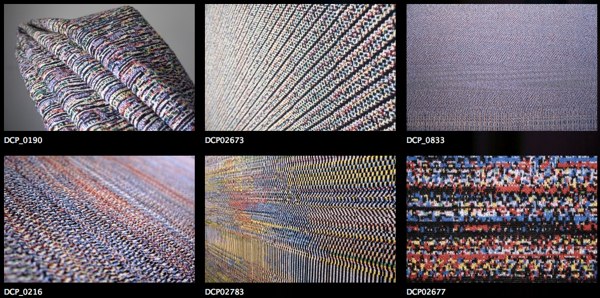
Fata Morgana by Damon Zucconi
tags:maps
Trackable Beverages This tap water “isoscape” map shows how hydrogen and oxygen isotopes vary throughout the country. Geographic factors like latitude, altitude and proximity to coasts all play a role in this isotopic variation. The cities on the map show where the researchers tested tap water along with bottled water, soda and beer. ACS/Journal of Agricultural and Food Chemistry
These geographically specific signatures show up in human hair making a record of you travels a real possibility.
To test this theory, the scientists analyzed tap water from 33 cities and looked at isotope patterns in Dasani bottled water, Coca-Cola Classic and Budweiser. They found the beverage isotope pattern from those cities matched the tap water pattern — which makes sense, because many beverage companies produce their drinks regionally instead of in one main location. For example, if you drink a Bud in Utah, it probably came from the Anheuser-Busch plant in Fort Collins, Colo., not St. Louis.
via fresser
tags:mapping maps surveillance

Fiat Automobile’s Lingotto Factory in Turin Italy.
tags:architecture autoEngadget Coverage NY Times Bits Blog Coverage
At Google I/O, Googles developer conference, Android got lots of announcements and will be going to many new places – like your tv. In the presentations by executives they spent a good amount of time throwing digs at Apple, and prosthetising their openness.
Some of the interesting bits, first Android 2.2 FroYo and then Google TV (what!?)
Built in tethering, assuming your carrier supports it & wi-fi hotspot capability.
It runs apps 5X faster
Flash 10.1 runs on it – hot and at the expense of your battery say Engadget
Application updates are cleaned up – Update all now supported and can be set to automatically download
Purchase on the Web Marketplace and send to device over the air – very cool
Music store in the Marketplace – not much mentioned aside from downloading being demoed – potential very big deal here.
Stream music from your desktop – iTunes library etc – This is Simplify Media tech, a recent Google acquisition
Google Mobile AdSense – which of course make sense. Multiple ad formats from any support Ad Network, openness.
Google TV – Getting TV and the Web married, another vector for Google Ads, on your TV. Set top box UI is, um, Googley. Is that a mouse pointer I see? Yes.
Put Android Apps on your TV – If the app doesn’t require phone specific stuff it should run today.
And now your regularly scheduled mobile updates ie. non Google I/O stuff
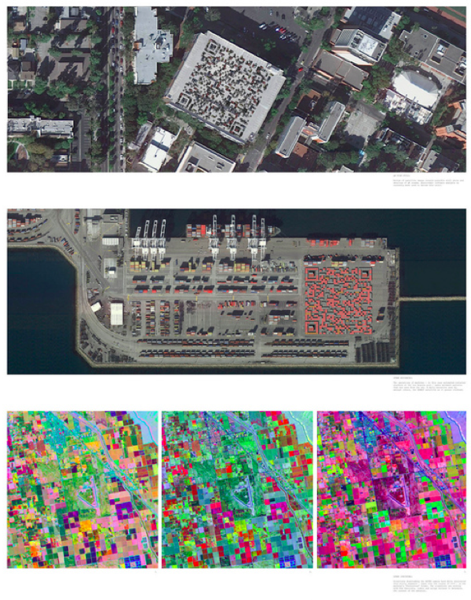
View past graffiti after it has been cleaned up
Graffyard uses QR codes to show the visual history after graffiti has been painted over. Its a nice example of encoding the visual of the city onto itself. One can imagine a future where city walls have a secondary digital presence and all advertising, graffiti and signage takes place via a persistent visual augmented reality system. The city becomes a contiguous blank canvas, a physical platform encoded with embed tags for the reality we want to see. Maybe.
African Churches Embrace Mobile
Reminders to come to services, tithings and sharing of bible passages for study all via SMS
Marko Ahtisaari who heads up design and user experience answers some questions about how Nokia is moving to react to the mobile world that is seemingly running away from them. He focuses on a very narrow definition of mobility, which may be right, or not.
“I still think the whole industry is missing a trick,” said Mr Ahtisaari during a meet-the-press session in London yesterday. “All the touchscreen interfaces are very immersive. You have to put your head down. What Nokia is very good at is designing for mobile use: one-handed, in the pocket. Giving people the ability to have their head up again is critical to how we evolve user interfaces.”
Heads up vs. heads down is a very interesting distinction and one that raises many interesting points about mobile device usage in the public sphere. I think if Nokia can move forward with a singular, focused direction they will be positioning themselves strongly for a good segment of the market. Im not sure if that segment will be a big enough percentage to keep them afloat, and it would represent a distinct turn from the all things to all people position they have put themselves in. What about this though – more than 50% of Nokia smartphones use touch interface ?
Speaking of heads down staring into the glowing screen – A series of photos exploring peoples relationship to their mobiles. More focused than the Flickr Lost in Text pool, which is also quite good.
The dconstruct conference website
Stretch the window down to less than 800px wide and you got the mobile version. Very elegant.
More than a third of Android users rolling on 2.1
Data compiled from a 2 week period of users accessing the Android Marketplace. Please take with a grain of salt.
Airports now on the small glowing screen
More evidence of the trend of mobile screens replacing public displays. Not sure I want to try to download an app while I’m racing through a terminal to make a connection just to see what gate my flight got moved too but, hey.
A nice roundup of technologies and ideas that are shaping the products of tomorrow. Links to examples for each in the article. Do note that four of the five listed here have a strong locative component.
1. AR browsers for mobile: Layers of data embedded in the real world around you that you can toggle between. Applications for real estate, food & entertainment, retail. This use of augmented reality will become how we live; not just an app. But will we be holding up our phones for long?
2. Augmented Mobile Profile: A social user interface implementation of your public profile. Real time information about the people around you and their entire “clouded” identity–from business card to playlists, Facebook profile to thought capitol on Slideshare. One of the ultimate social/mobile integrations I’ve seen.
3. The Active Idle Screen: Replaces your current homescreen with personal and valuable information (weather, trivia, sports scores, horoscope, etc.) in addition to advertisements for deals/coupons. Will reach the lowest common denominator audience.
4. QR codes without the QR: Recognizing that camera phones are crappy, we can analyze the photos. Take a picture of something and you receive contextual results around it. Mixed with geotargeting, this becomes very powerful. (Reviews, Where to buy, etc.)
5. Data Conformity: Location-based content and services are the promise of mobile marketing. But it has to work across all devices, content providers, and mobile carriers–one of today’s greatest challenges. When the great aggregator arrives, it will help to bring data conformity and data consistency.
Worldwide Mobile Browser Share
Displayed very nicely as a world map
The film unfolds as the viewer visits different parts of the city. The more they travel, the more of the film they see. Whats great is the creators have released the technology behind it as open source, in addition to the first GPS film Nine Lives. This has to be better than the lame 3D that seems to be in fashion at the multiplex.
$12.7 Billion by 2014 in Location Based Services
A number thats as good as any and comes from Juniper Research. Whatever the numbers are predicted to be, location based services, hyper local advertising, geo targeted marketing and anything that has to do with exactly where you are at a given point in time – especially when you are not at your desk at work or in front of the television at home – is going to be a big deal. Period.
Helpful Guide for appropriate technology usage
Covers your basic situations of office, home, in car and the great outdoors. For instance usage of MacBookPro in the Great Outdoors should be avoided – the start up sound is bear for “bring it”.
tags:mobile the future work

graffyard makes past graffiti made visible after it has been cleaned up.
It’s a nice example of encoding the visual history of the city onto itself. One can imagine a future where city walls have a secondary digital presence and all advertising, graffiti and signage takes place via a persistent visual augmented reality system. The city becomes a contiguous blank canvas, a physical platform encoded with embed tags for the reality we want to see. Maybe.


In the vein of recent art exhibitions I did not see one of my favorite artists Jan Dibbets, the conceptual photographer that held a large influence on me during my last two years in architecture school had a recent exhibition at the Gladstone Gallery. His obsession with the horizon is still unwavering, and collision of perspective and flatness still hold strong,
tags:art horizon photography![]()
I couldn’t love something like this more. Clever hidden in plain sight street art that creates a small moment of delight for the few people that catch a glimpse at the right time.
tags:art graffiti street art the city urbanThese wireframes screenshots come from a recent developer build of Windows Phone 7. I personally love the way it looks, and would be a really bold move for Microsoft to release such a minimalist black and white UI.
FCC is hoping to get rules passed that require mobile providers to let customers know when they are coming up on their maximum number of minutes or text messages for their plan. If you guess that the mobile companies aren’t too keen on the idea you get a cookie.
Nearly 25% of US adults are without a landline telephone, using their mobile as their primary phone. Are you?
Send a gift via a text message. Go to the site, select a gift, type in the recipients mobile number, pay and send. The recipient receives your text and goes to the store to redeem their flowers, massage, movie tickets etc . Too bad you missed out on this chance on Mothers Day – ya’ know, “When you care enough to send the very best”
Facebook looks to be making it’s much talked about move into the locative “check-in” space currently dominated by Foursquare and other players like Gowalla and MyTown. Some big brands are supposedly on board to bring apps that leverage the check-in functionality (McDonalds is said to be building a coupon or loyalty something or other on the not-yet-announced platform) Given Facebook’s recent troubles with privacy it seems like they may be in for a bumpy ride.
Side by side comparison of HTC Incredible and the Nexus One
Critical take on the changes made in the Sense UI found on the HTC Incredible. Lots of screen shots.
Ouch.
The iAd platform sold by Apple is essentially the opportunity to be associated with Apple. There is nothing new here except the level of control the Apple has over the process. I would add that
The guys behind the app Red Laser talk about how simple UX improvements set their app apart in the marketplace and won them users and acclaim.
Nice look at some of the features in the new iPhone OS but you still got to wait until June? Except you devs already running it ;)
The horse race is heating up in the smartphone market. Android has now surpassed Apple for second position. RIM still in front.
In store digital getting replaced by mobile
There is a trend toward a mobile concierge, a better more personable service than that provided by in store displays.
Mere mortals don’t think of things on their computers as “files.” People think about digital representations of things the same way they think about real physical things: they think about photos, videos, text documents, articles, and people. A “file” on a computer is just a universal container for one of those things.
Square launched to the public.
Download the iPhone or Android app, sign up and get your square reader mailed to you. Whats square? It plugs into the audio jack of your smartphone and lets you accept credit card payments from just about anyone. Need a better explaination? – Watch this fine video
Google and Verizon making a tablet
Also moving away from unlimited data and charging by the bucket of megabytes. ugh.
Mobiles only Internet and the problems there in
Technological gaps exist that make it difficult for mobile only users of the web to have a satisfactory experience. Signup flows and many interactions are still aimed at the desktop web user. nb. Its a short article that links to an academic paper. Nevertheless it underscores the need to design and build for all types of users especially for users that might very likely come to you on a mobile device.
tags:interesting mobile
The Box is back in the UK. For a period of over a year the BBC monitored their very own 40 foot shipping container as it travelled around the world carrying goods across oceans via intermodal transport. It was all to try and tell the story of globalization through the one defining symbol of the interconnected system of global trade – the intermodal shipping container.
It started it’s journey loaded with Scotch Whiskey headed for Shanghai China, and visited ports in Singapore, Bangkok, New York and Los Angeles and long stay at idle in Yokohama. Along the way it provided the context for discussions about piracy, the decline of the global economy and it’s effect on global trade and highlighted to the kinds of goods being made for cheap overseas and shipped to the west.

[ i am the weather :: interestingness by sean salmon powered by Wordpress And is definitely Not Plastic Bag ]